
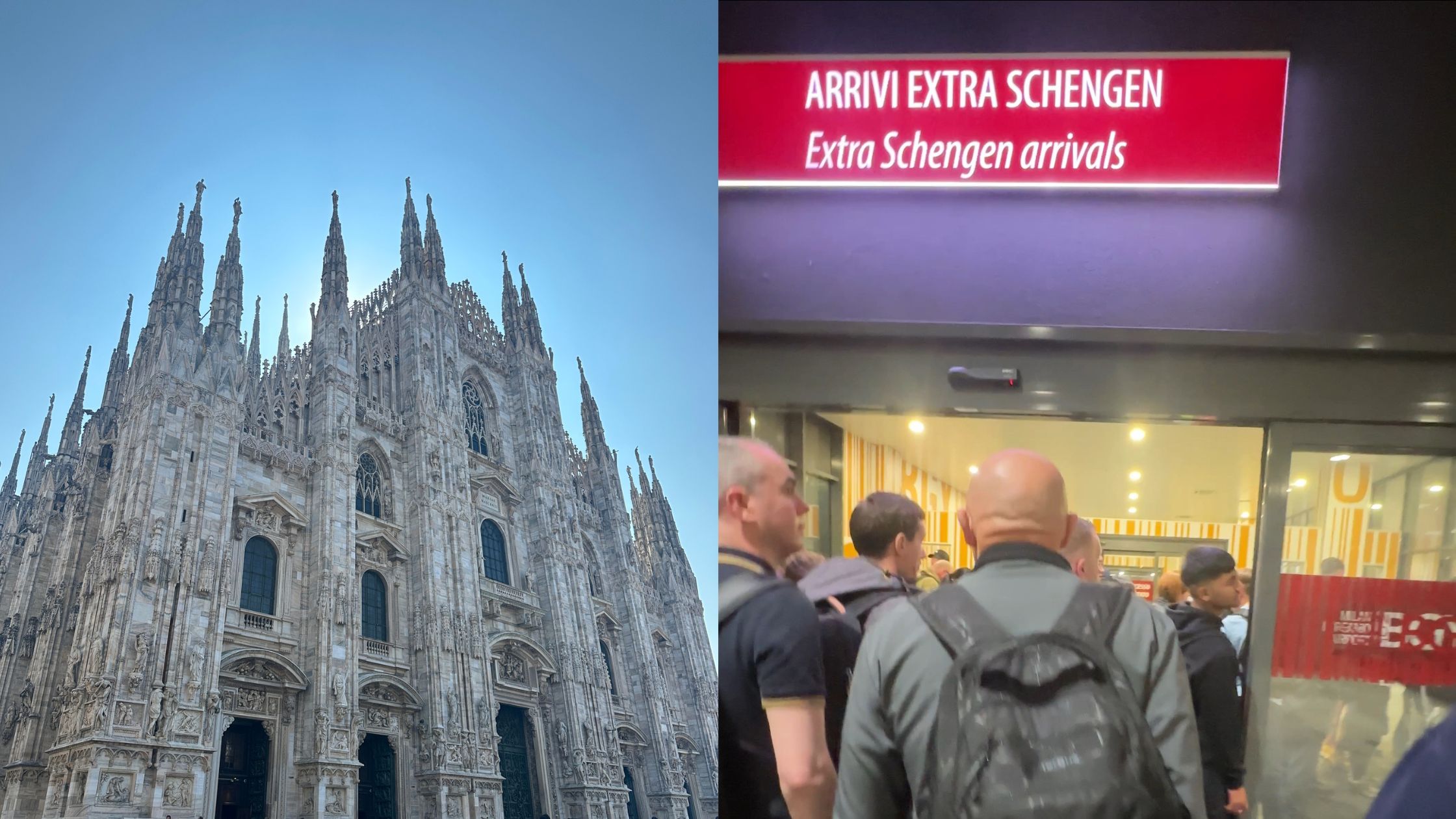
EES Gates Causing Airport Delays across Europe - What to Know about the New EU Exit/ Entry System for non EU residents
The EU Entry/Exit System (EES) is a new automated IT system that began its rollout on October 12th 2025 and was due to be rolled out fully across airports by 10th April.
This system replaces the need for physical passport stamps, with digital registration for non-EU nationals now becoming a requirement to enter various countries.
The system is designed for non-EU citizens (including British citizens) visiting Schengen countries for short stays (up to 90 days in 180 days). This system is in place for anyone above the age of 12 years old.
... except it's not been fully rolled out in time for the deadline. And it is causing carnage in many airports.
What does the new EES Gate system mean, and what does it mean for non EU travelers looking to travel to EU countries?
As someone whose recently been through BGY Airport since the system launched, here is what you need to know.
Airport Carnage as EES System Causes Major Delays and Missed Flights for Passengers
The rollout of the EES System had the aim to strengthen security and make travel smoother, however that isn't the case for many airports across the Schengen Zone.
Due to some hiccups with installation, technology and training, not every airport was quite prepared for the full rollout deadline.
There have been long queues at many European airports and warnings that delays could be worse as we approach the busy holiday periods.
@gigsntravel BGY Airport count your days, think I spent longer in that queue for passport control than the flight took #milan #bgyairport #bergamo #bergamoairport #milanairport
♬ original sound - Mr Trallaloo | Official
Passengers Miss Flights at Milan BGY Airport as EES System Fails to be Fully Rolled out
Having flown into BGY on April 8th and out on April 12th, I experienced some insane queues as a Britsh Tourist.
While my flight was (thankfully) delayed so I was able to make it. I witnessed many other passengers have to be rushed through the queue during final call, or some even missing their flights back home due to delays.
Expect Long Delays when Arriving and Departing
With a flight that landed around 11pm, it was gone 1am when I finally cleared BGY airport - queueing for pretty much the same length of time my flight from Nottingham East Midlands to Milan Bergamo airport took.
It was just as chaotic on the way back, as it took just over 1 hour to clear Passport Control at Gate B when flying out of BGY Airport.
Disabled Passengers and Families with Young Children were forced to queue for over an hour before any assistance was offered
What most surprised me was the lack of support for disabled or injured passengers. As well as passengers with young children.
I witnessed a man on crutches stood a little in front of me in the queue when I arrived, who was forced to stand for over an hour before the airport staff finally offered him the chance to go through the E Gates, which had not been touched by any other passengers & remained empty in the past hour.
It wasn't until a lady with a small child who was clearly struggling in the queue begged several times for them to join an accessible queue.
Eventually, staff prompted all British Tourists to change to queuing for the E gates, but we still had to get our passport stamped after that. By the time we got through everything, it had been around 2 hours.
Unfortunately, it wasn't any better leaving BGY airport, where I witnessed a man struggling to stand in the queue, with no accessible queuing alternative. The man was shouted at by staff and told to sit on a wheely office-style chair - no wheelchair offered.
Meanwhile a family with several children under the age of 12 repeatedly told staff they'd been queueing for over an hour and their flight was on final call. They were repeatedly shouted at to stay where they were, until a different member of staff saw them, took them over to the E Gates, only to then ask how old the children were, and then take them back to the queue they were already in and told to wait at the back once again.
Arrive 4 Hours Early
Having arrived at BGY Airport 3 hours early, I only made my flight "with 20 minutes to spare" due to the fact it was delayed, so boarding didn't begin until 25 minutes after the original time.
In my personal experience at BGY was that security was super quick - which was a positive. You then go through duty free shopping and a restaurant area. Passport control is not until right before your gate - where there is only one take away food place.
I cleared security, stopped for food, and then saw my flight was delayed by 45 minutes. I still allowed an hour to get through passport control before my original gate closure time of 3:45pm.
When I got to the passport control area of Gate B at 2:45pm, I was greeted by a very long queue, which I was told would take one hour to clear. Instantly people around me on earlier flights began to stress.
BGY Gate B was primarily serving to non EU destinations such as various UK airports and Tirana in Albania.
With passengers due to Tirana, London Stanstead, and Bristol all being rushed to the front of the queue after standing around for a while - but only at the very last minute while the final call was happening.
I ended up clearing the passport control queue in 1 hour 7 minutes, and was not directed to using the EES gates.
From what I've read online, people flying in and out of other airports such as Pisa and Geneva have also experienced similar delays.
Meanwhile various airports in Portugal suspended the EES system for the weekend to avoid delays - which for some airports there, was rolled out a few months prior.
Brexit, Understaffed Airports, or an EES Rollout Fail?
When asked why the queues were so long by passengers, staff at BGY blamed Brexit means that the non EU queues are significantly longer. While this bound to effect queueing times, the staff failed to also mention the lack of rollout for the EES Gates that were meant to be fully rolled out 2 days prior.
The EES gates were barely in use. With passengers walking up to them, to then be shouted at by staff to NOT use them. For what seemed like about 95% of the time.
I saw a small number of people allowed to use them, but it was only a handful of British Travelers being instructed to use them while their flight was on final call. I'd estimate I saw 30 people maximum use them in the whole 1 hour & 7 minutes I was queueing for.
@gigsntravel Replying to @user917374748488474758 It is true, the queues are insane. This was today 12/04/26. The EES, which replaces passport stamping for all non-EU citizens, began its rollout on 12 October 2025. I actually flew into Lisbon the day this was meant to be rolled out there, and the machines were still all wrapped up in packing & not in use. It was scheduled to become fully operational across all Schengen area border crossing points from Friday 10th April… except it’s not. When travelling, account extra time for confusion amounted staff instructing travelers what to do during the transition period, as well as equipment failures and rollout issues. If flying into BGY airport, I’d reccomend coming 4 hours before your flight. Keep in mind the passport control is AFTER duty free & the area where the restaurants are, but BEFORE the gates. Give yourself plenty of time, at least 1.5 hours before your gates close just to be safe! There is another duty free area & 1 to-go cafe at Gate B #bgyairport #milanbergamoairport #bergamoairport #milan #milanairport
♬ Ode to Joy- Symphony No.9 in D Minor 'choral' - Lorne Balfe & Russell Emanuel & Steve Kofsky
What is the EES Gate System?
The European Union’s (EU) Entry/Exit System (EES) is a new digital system impacting people from non EU countries (including the UK).
This system collects biometric data (fingerprints and facial images), as well as a passport scan.
Which countries are in the Schengen Area?
The countries in the Schengen area are:
Austria, Belgium, Bulgaria, Croatia, Czechia, Denmark, Estonia, Finland, France, Germany, Greece, Hungary, Iceland, Italy, Latvia, Liechtenstein, Lithuania, Luxembourg, Malta, Netherlands, Norway, Poland, Portugal, Romania, Slovakia, Slovenia, Spain, Sweden, and Switzerland.
While The Republic of Ireland and Cyprus are within the EU, they are not within the Schengen area, so the EES is not applicable when travelling to either of those countries.
When will the new EU Entry/ Exit System be introduced?
The EES System began its rollout on 12 October 2025, and was due to be fully rolled out by 10 April 2026.
However, many airports are not yet ready to launch this new system, with E-Gates being installed, but not in use in many airports - as well as confusion with staff on exactly where to send people across various airports.
Who does the new EES Gate System Impact?
The EES Gate System Impacts non EU travelers looking to travel to EU countries within the Schengen Zone. This includes British travelers after the UK voted to leave the EU in 2016.
How should I prepare for my flight with the new EU Entry/ Exit System rules?
Allow for airport delays
Non EU travelers should prepare days when traveling to EU Countries, while some airports have been smooth running, other airports have had extreme delays with many passengers missing flights.
Personally, having experienced chaos at BGY Airport myself, I would leave at least 4 hours to allow for delays, disorganisation and hiccups.
To be safe, prepare for the worst and expect delays - it's better to be safe than sorry.
Ensure your passport is in good condition and valid for at least 6 months, as the system requires a digital scan.
Check your Passport Validity
Ensure your passport is in good condition and valid for at least 6 months as the system requires a digital passport scan.
Be ready if you are questioned
Be prepared to answer questions about your trip (accommodation, length of stay, return ticket, sufficient funds). This won't always happen, but different countries may be more likely to question you than others.